

Guides / Guide
How to save money on groceries: 6 habits that work in any shop
Check the kitchen, plan dinners, lean on cheap staples, cook once and eat twice, waste less and set a number before you shop.
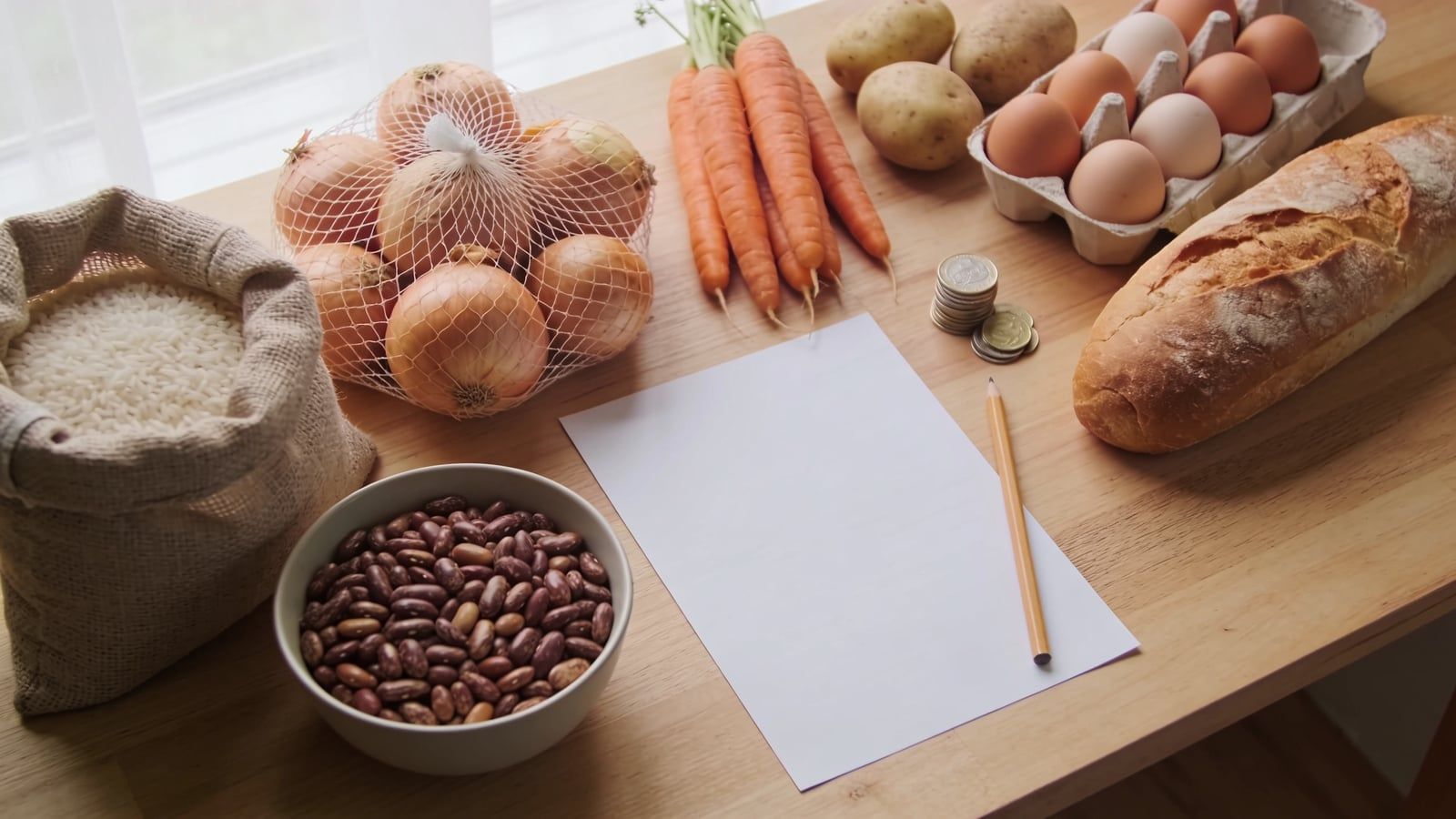
You do not need coupons to spend less on food. Most of the saving comes from six habits: knowing what you will cook, buying only what is missing, leaning on cheap staples, wasting less, and having a number in mind before you walk in.
1. Check the kitchen first
Look in the fridge, freezer and cupboard before every shop. Write down what needs using up and what is missing. The what can I cook with what I have guide gives a five minute method.
2. Plan dinners, then write the list
Pick the week's dinners first and list only the ingredients they need. A list written from a plan is shorter than one written in the shop. Here is how to make a grocery list that works.
3. Build meals on cheap staples
Per pound, the staples cost far less than ground beef. These are US averages for October 2026 from the US Bureau of Labor Statistics:
| Food | Price per pound |
|---|---|
| White potatoes | $0.99 |
| White rice | $1.10 |
| Dried beans | $1.68 |
| Chicken legs, bone-in | $1.75 |
| Ground beef | $6.76 |
Use a small amount of meat to flavour a big pot of beans, rice or potatoes. Your shop's prices will differ, so read your own receipt.
4. Cook once, eat twice
Double a recipe and eat it on two nights, or freeze a portion. The meal prep guide for beginners shows a first week.
5. Waste less
Food you throw away is money you already spent. Eat the softest food first and measure rice and pasta so you cook what you will eat. More in how to use up food before it goes bad.
6. Set a number before you shop
Decide the week's food budget from your last month of receipts, then plan to fit it. Start with how much to spend on food each week, or see a priced week in how to eat on $50 a week.
Sources
US Bureau of Labor Statistics, average retail food prices, US city average, October 2026 (series linked in the table).