

Guides / Guide
How to make a grocery list that works
Write the list from the week's meals and the food you already have, so you buy what you need and use what you buy.
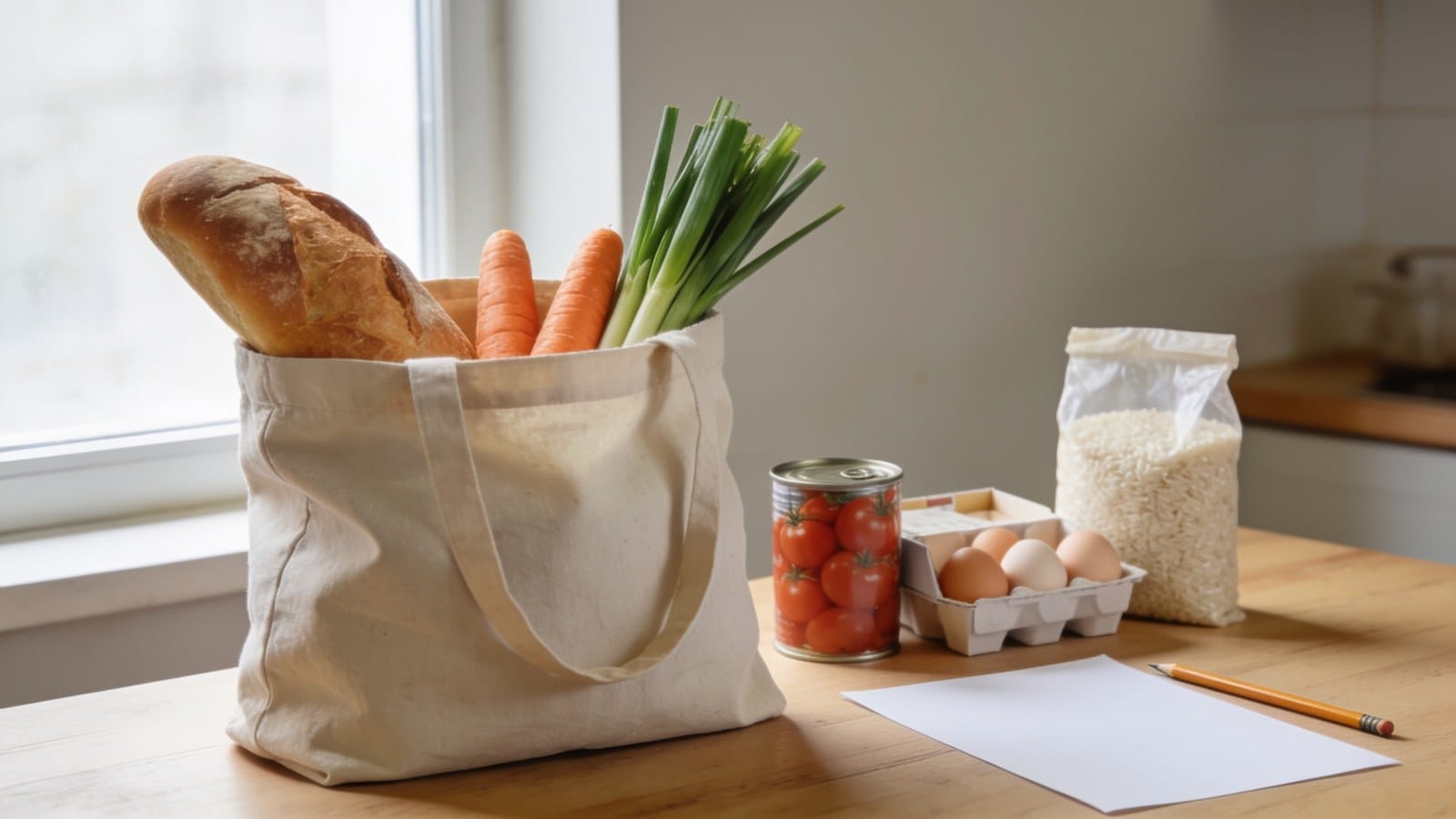
A grocery list that works is short, and every line on it has a job. It is written from the meals you will cook and the food you already have, not from memory in the shop. Here is how to make one in about ten minutes.
1. Check what you have first
Open the fridge, the cupboard and the freezer. Note what needs using soon and what you have plenty of. This is the step most lists skip, and it is where duplicates come from: a third bag of rice, another can of tomatoes.
2. Choose the meals, then write the list
Pick the dinners first, even if it is only three or four. Then write the list from the meals. A list written from the meals is shorter, and every item has a meal to go into. If you are stuck for meals, start with what you have.
3. Write only what is missing
Go meal by meal. For each ingredient, ask: do I have it? If yes, leave it off. If no, write it with an amount. "Onions, 3" is better than "onions", because you will not stand in the shop wondering.
4. Let one ingredient do two jobs
Fresh food is where money is lost, because it goes off before it is used. Plan so that one purchase covers two meals. Peppers can go into a stew on Monday and an omelette on Wednesday. Greens can go into a sauce and a side. A pot of beans can be dinner and then lunch. If a recipe needs half an onion, use the whole one or plan where the other half goes.
5. Sort it by where you find things
Group the list the way you walk the store or the market: vegetables together, then grains, then canned food and dry goods, then anything cold. You will not double back, and you are less likely to wander into things that are not on the list.
6. Put the money at the top
Write the amount you can spend at the top of the list. Add up the list roughly as you go, then trim before you leave home. It is easier to cross out an item on paper than to put it back at the till. If you do not have a number yet, read how much to spend on food each week.
Paper, phone or app
Any of them works. The best one is the one you will have with you. If more than one person shops, a shared list on a phone stops two people buying the same thing. If you shop at a market, a printed list is hard to beat. The weekly market list gives you a checklist to start from.
A list for the month
If you shop once or twice a month, keep two lists. The stock-up list holds things that keep: rice, beans, oil, flour, canned food, tea. The weekly list holds things that do not: greens, tomatoes, bread, milk, fruit. Check the cupboard before you write the stock-up list, so the fresh list stays short.
Five mistakes that make a list fail
- Writing the list before checking the kitchen.
- Writing the list with no meals in mind.
- Writing items with no amount.
- Buying fresh food for meals you have not planned.
- Never checking the total against the money you set.
A weekly meal plan fixes most of them.