

Guides / Guide
How much should you spend on food each week?
There is no one right number. Here is how to find yours from your own receipts, and how to adjust it when prices move.
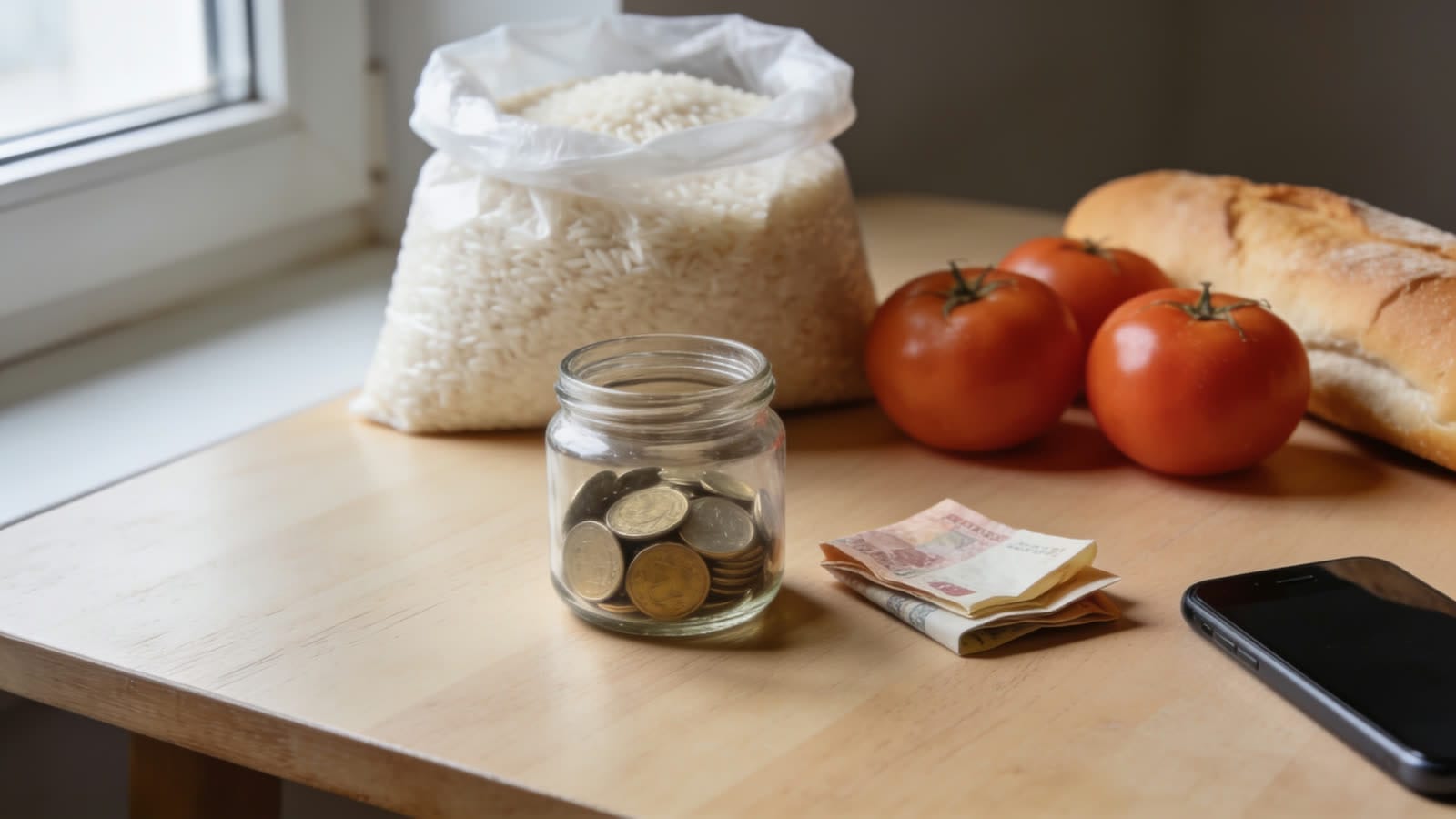
There is no single right amount. Households differ in size, in what they cook and in what food costs where they live. The number that works is the one built from what your household really spends. Here is how to find it in an evening.
Want a figure to compare yours with? See the food budget by household size, with sourced US and UK ranges for 1 to 6 people.
Step 1: gather four weeks of spending
Collect everything you spent on food over the last four weeks:
- Supermarket, store and market receipts, and market money you remember.
- Bank or mobile money messages that name a food seller.
- Takeout, delivery, snacks and drinks out.
If you did not keep receipts, use your best guess for each week and note that it is a guess. Next month it will be real.
Step 2: add it up and divide
Add the four weeks together and divide by four. That is your real weekly food spend, and the first honest starting point. Multiply by about four and a third for a month, since a month is a little over four weeks.
Step 3: decide what the number should be
You now have three choices, and all of them are fine:
- Keep it as it is, if it fits your other costs.
- Lower it a little, and plan meals around what you have to make up the difference.
- Raise it, if it was too low to be true and you kept running short.
A budget you break every week teaches you nothing. Set one you can keep, and change it in a month.
Step 4: split it per person and per day
A share per person helps when you decide about guests, a visit or a new household member. A share per day tells you at a glance whether a meal out fits. The grocery budget calculator works out both.
Step 5: check once a week
Once a week, compare what you spent to the number. If you are ahead, plan a cheaper week. If you are behind, you can top up or trim. A short check each week stops a surprise at the end of the month.
Where the money often goes
- Extra trips for one or two items, which turn into a full basket.
- Food bought without a plan, which goes off before it is cooked.
- Meals out and delivery that were not in the number.
- Buying what you already own, because nobody checked.
A weekly plan deals with most of these.