

Guides / Guide
How to start meal planning: a first week for beginners
Start with five dinners you already cook and plan three of them. A small plan you keep beats a big one you drop.
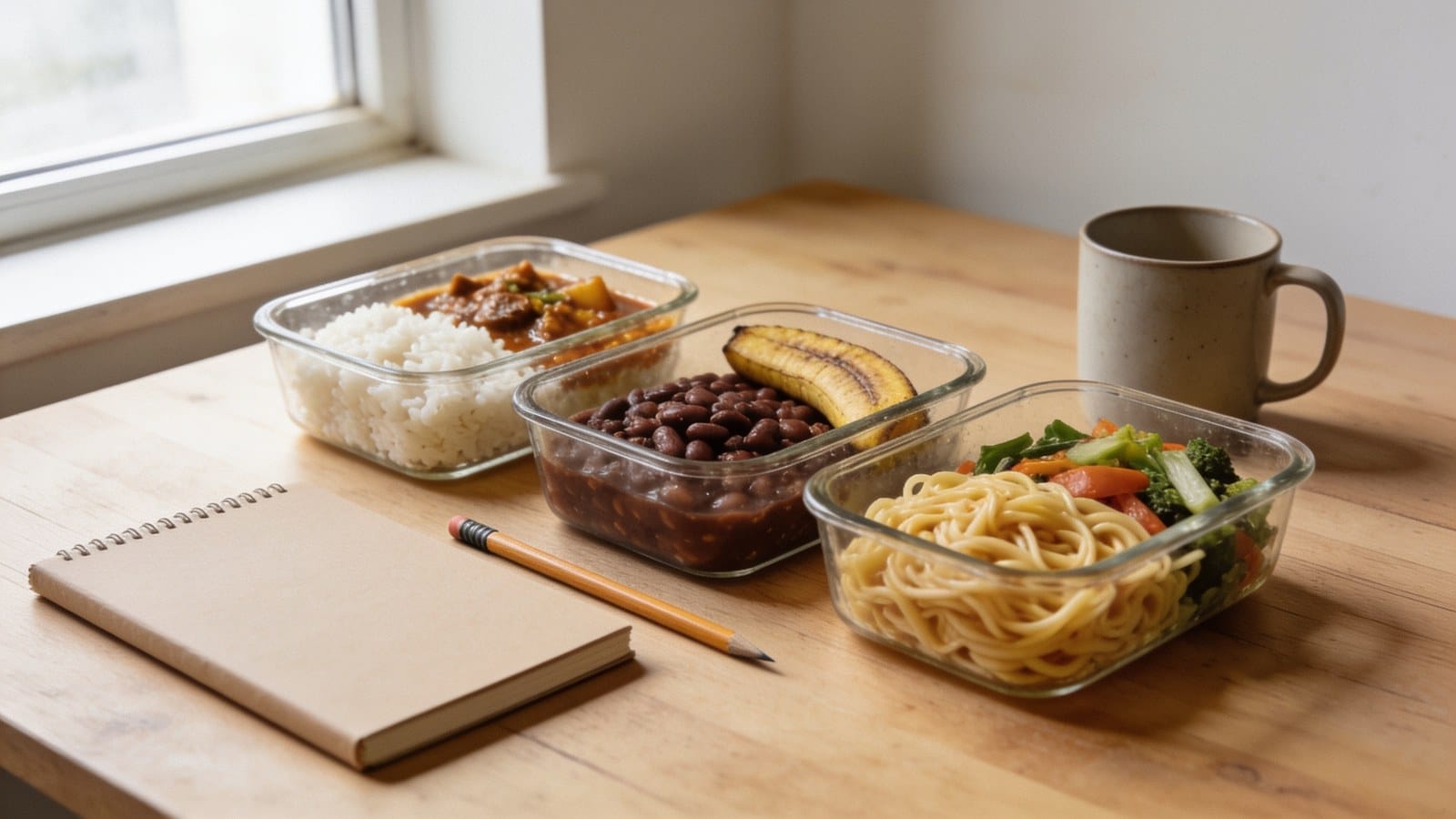
A first plan that is too big is easy to drop: seven dinners, a new recipe for each, and by Thursday it is over. This start is small enough to keep. It takes about twenty minutes and needs no new recipes.
Step 1: write down five dinners you already cook
Do not search for recipes yet. Write down five meals your household already makes and eats without fuss. Rice and stew. Eggs and potatoes. Pasta with a tomato sauce. Githeri. Fried rice. These are your go-to meals, and they are the base of your first plan.
Pick ones that are easy on a tired weeknight, and ones that reheat well.
Step 2: plan three nights, not seven
Look at the week ahead. Which nights are busy? Which are open? Put three of your five meals on three nights. Leave one night for leftovers and the rest loose, for a takeout, a visit or a change of mind. If you sit down with someone else, look at both calendars first.
Step 3: write one list from the plan
Check what you already have, then write down only what those three meals are missing. Our guide to making a grocery list that works goes through it step by step. If two of the meals share an ingredient, buy it once.
Step 4: pick a planning time
Choose one day, and keep it. The day before you shop works well, because you can see what is left in the kitchen. Ten to fifteen minutes is enough.
Step 5: look back at the end of the week
At the end of the week, ask three questions. What did we cook? What did we not get to? What went off? Swap one meal that did not work for a different one from your five, or add a new meal to your list. After a month you will have a rotation that fits your household.
Why first plans fail
- Too many meals, so one missed night feels like a failure.
- Too many new recipes, with a long list of ingredients you do not use again.
- No loose night, so any change in plans breaks the week.
- A plan for the person you wish you were, not the household you have.
If a plan slips, move the meal to another night.
When you want to keep the cost down
Once the habit holds, add a number. Our guide to meal planning on a budget shows how to set the money for the week and pick meals that share ingredients. If you cook for one or two, here is a budget meal plan for 1 or 2 people, with the shopping list.